Dental implants have become the most widely recommended long-term solution for missing teeth, and for good reason. They function like natural teeth, they preserve the jawbone, and with proper care they can last decades. But many patients have questions before committing, particularly around cost, the length of treatment, and whether they are a good candidate.
This post covers what the process actually looks like from start to finish, what affects the cost, and what patients in the South Bay should know when considering implants.
How Dental Implants Work
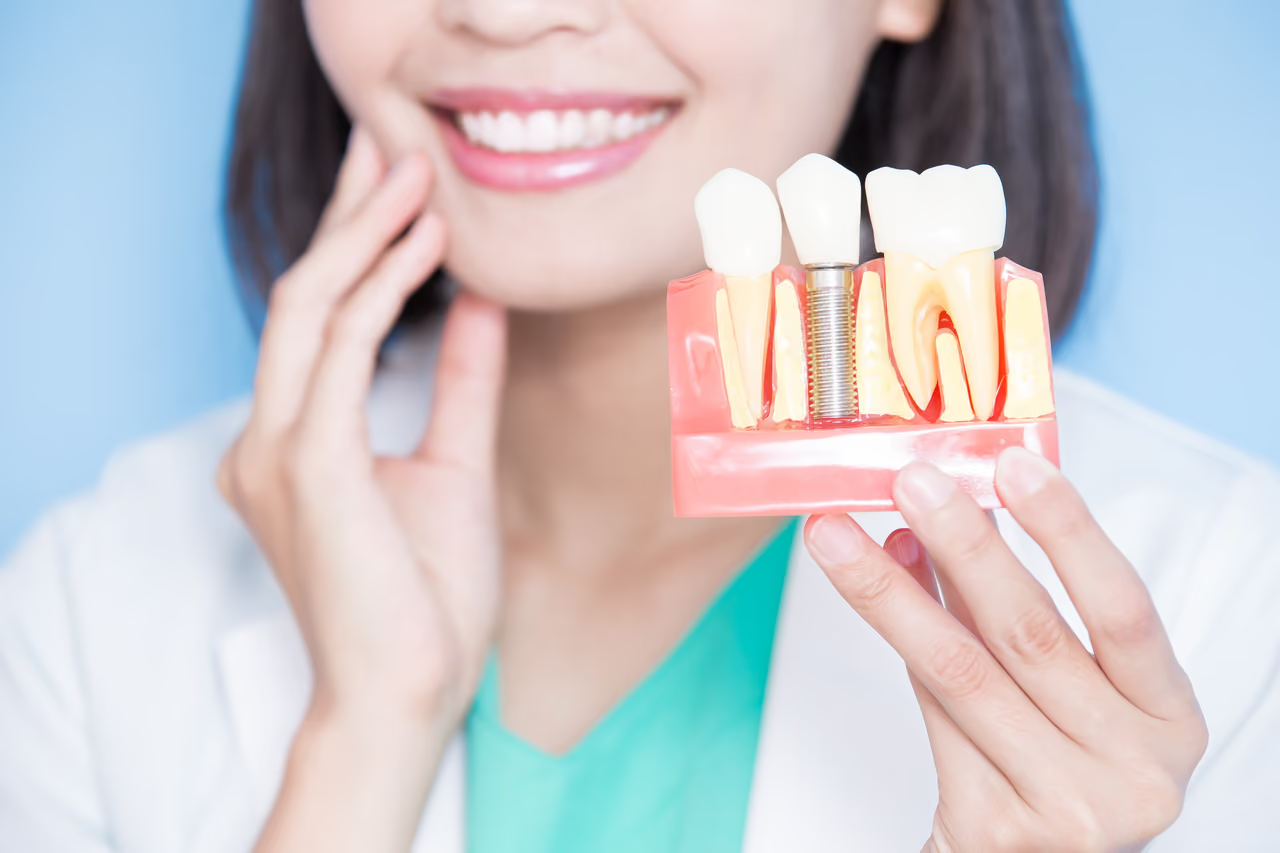
A dental implant is a small titanium post that is placed into the jawbone where the missing tooth root used to be. Over the course of a few months, the implant fuses with the surrounding bone in a process called osseointegration. Once fully integrated, a custom-made crown is attached to the top of the implant, completing the restoration.
The result is a replacement tooth that is anchored firmly in the jaw, looks natural, and functions exactly like the tooth it replaced. Unlike dentures, it does not shift. Unlike a dental bridge, it does not rely on adjacent teeth for support.
The Different Types of Implant Solutions
Not all implant treatments are the same. The right solution depends on how many teeth need to be replaced and the condition of the jawbone.
Single tooth implants replace one missing tooth with one implant and one crown. This is the most straightforward option and the most common.
Implant-supported dentures use a small number of implants to anchor a full arch of teeth securely. This is a significant improvement over traditional dentures in terms of stability, comfort, and long-term bone health.
All-on-X involves placing four to six implants in strategic positions to support an entire arch of teeth. It is sometimes referred to as "teeth in a day" because the full restoration can often be placed in a single visit.
What Affects the Cost
Dental implant costs vary from case to case, and understanding what drives that variation helps patients plan appropriately.
Number of implants. A single implant costs less than a full-arch solution. The complexity and materials involved scale with the scope of the treatment.
Preparatory procedures. Some patients require bone grafting before implant placement because the jawbone has thinned or shrunk after tooth loss. Bone grafting adds time and cost but is often necessary for a successful outcome.
Type of restoration. The crown, bridge, or full arch placed on top of the implants varies in material and complexity. Custom-milled options tend to be more durable and natural-looking.
Specialist involvement. Some practices refer patients out for the surgical phase, which can add costs and additional visits. At Schnierow Dental Care, the full process is handled in-house, from evaluation and any preparatory procedures through to the final restoration.
Most PPO dental insurance plans provide partial coverage for implant treatment. Medi-Cal coverage for implants is limited, but the team at Schnierow can review your specific plan during the consultation. For out-of-pocket costs, financing options through CareCredit, Sunbit, Cherry, LendingClub, and in-house payment plans are available.
The Timeline: What to Expect Step by Step
One of the most common surprises for patients is that implant treatment is not completed in one visit. The full process typically spans several months, though the active treatment time is limited.
Consultation and imaging. The first step is a thorough evaluation with digital X-rays or a cone beam scan to assess bone density and plan the placement accurately.
Preparatory work if needed. If bone grafting or a tooth extraction is required, this is done first. Healing time after a graft is typically a few months before implant placement can proceed.
Implant placement. The titanium post is placed during a surgical procedure performed under local anesthesia. Most patients report less discomfort than expected. Recovery is typically a few days of soreness and swelling.
Osseointegration. The implant needs time to fuse with the jawbone. This phase generally takes two to four months and requires no action from the patient other than maintaining good oral hygiene and attending follow-up checks.
Crown placement. Once the implant is stable, impressions are taken and the final crown is fabricated and attached. At this point the restoration is complete.
Who Is a Good Candidate?
Most adults who have lost teeth are candidates for implants, but a few factors affect eligibility.
Adequate bone density is necessary for the implant to integrate successfully. Patients who have had missing teeth for many years may have experienced bone loss and may need grafting first.
Overall health matters as well. Uncontrolled diabetes, active gum disease, and heavy smoking can all affect healing. These conditions do not automatically rule out implants, but they require management before and during treatment.
Age is rarely a barrier for adults. Teenagers are generally not candidates because the jaw is still developing, but healthy adults of any age can often be treated successfully.





.avif)