
The Truth About Teeth Whitening: What Works and What Does Not
Drugstore shelves are packed with whitening strips, gels, pens, and toothpaste, and social media is full of home remedies claiming to deliver a Hollywood smile overnight. Some of it works to a degree. Much of it does not do what it claims, and a few popular methods can actually damage teeth over time. Here is an honest breakdown of what actually whitens teeth and what is mostly marketing.
Why Teeth Discolor in the First Place
Before looking at whitening methods, it helps to understand what is actually being treated. Tooth discoloration generally falls into two categories.
Surface staining, called extrinsic staining, comes from what touches the outside of the tooth, coffee, tea, red wine, tobacco, and certain foods. This type of staining responds well to most whitening methods, since the pigment sits on or near the enamel surface.
Staining from within the tooth, called intrinsic staining, happens deeper in the tooth structure and is caused by things like aging, certain medications taken during childhood, or trauma to a tooth. Intrinsic staining is harder to treat and often does not respond well to standard whitening products at all, which is one of the most common reasons people are disappointed with over-the-counter results.
Professional In-Office Whitening
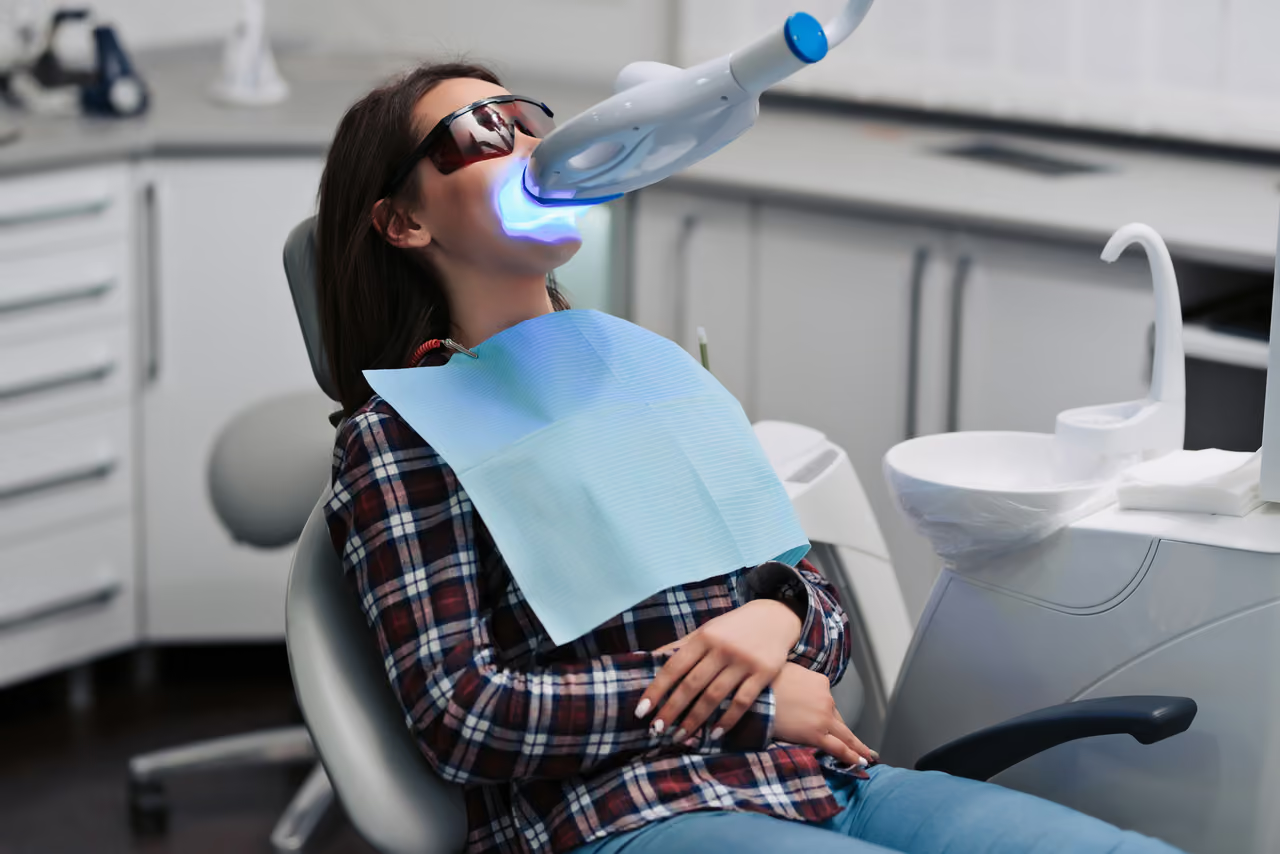
This is the fastest and most predictable option available. A dentist applies a high-concentration whitening gel, often activated with a special light, directly to the teeth in a controlled setting. Results are typically visible immediately after a single session, and the concentration used is significantly higher than anything available for home use.
Because it is performed under professional supervision, the gums and soft tissue are protected during the process, which reduces the risk of the sensitivity and irritation that can come with at-home methods used incorrectly.
Professional Take-Home Whitening Kits
A middle option between in-office treatment and drugstore products. A dentist creates custom-fitted trays based on an impression of your teeth, along with a professional-grade whitening gel to use at home over the course of one to two weeks. The custom fit means the gel stays in contact with the teeth evenly, rather than leaking onto the gums the way ill-fitting drugstore trays often do.
Results take longer than in-office whitening but tend to be more gradual and, for many patients, are easier to control and adjust to the level of whitening desired.
Over-the-Counter Whitening Strips and Gels
These do work, to a point. Whitening strips and gels sold in stores use a much lower concentration of whitening agent than professional treatments, which means results are more modest and take longer to appear, typically one to two weeks of consistent use for a noticeable difference. The uneven fit of one-size strips also means coverage is not always consistent across every tooth.
For mild surface staining, these can be a reasonable option. For anyone hoping for a dramatic change or dealing with intrinsic staining, expectations should be adjusted accordingly.
Whitening Toothpaste
This is the most limited option of the group. Whitening toothpaste generally works through mild abrasives that help remove surface stains during brushing, not through a bleaching agent that changes the underlying tooth color. It can help maintain results after a professional whitening treatment or slow the buildup of new surface stains, but it will not meaningfully lighten the natural color of the teeth on its own.
Some whitening toothpastes are also more abrasive than standard toothpaste, and using one every single day for months at a time can gradually wear at enamel, so this is not necessarily a risk-free daily habit either.
Charcoal and DIY Whitening Trends
Activated charcoal toothpaste and powders have circulated widely on social media, along with home remedies involving baking soda, lemon juice, or hydrogen peroxide rinses used without dental guidance. None of these are backed by strong clinical evidence of effectively whitening teeth, and several carry real risk. Charcoal and baking soda are abrasive and can wear down enamel with regular use. Lemon juice is acidic and can erode enamel directly. Once enamel is worn away, it does not grow back, and thinner enamel actually makes teeth look more yellow over time, not less, since the darker dentin layer underneath becomes more visible.
What About Sensitivity?
Sensitivity during or after whitening is common, particularly with higher-concentration treatments or overuse of home products. This usually resolves on its own within a day or two after treatment ends. A dentist can also recommend desensitizing toothpaste or adjust the whitening approach for patients who are especially prone to sensitive teeth, something that is much harder to manage with an over-the-counter product used without guidance.
When Whitening Will Not Be Enough
Whitening only changes the color of natural tooth enamel. It does not affect the color of existing crowns, veneers, or fillings, which can leave a mismatched appearance if those restorations are visible when you smile. It also will not meaningfully improve intrinsic staining in many cases, or address chips, gaps, or uneven tooth shape.
For patients dealing with those issues, dental veneers or a broader smile makeover plan are often better suited to achieve the result they are actually looking for, since whitening alone has real limits.
Getting a Recommendation Specific to Your Teeth
The right approach depends on the type of staining involved, how quickly a result is needed, and whether sensitivity is a concern. A dentist can evaluate this in a way no drugstore product or online guide can, and can also rule out whether discoloration is related to an underlying issue that whitening will not resolve on its own.

Skip the Guesswork
A short exam is really all it takes to find out whether your staining will respond well to whitening or whether something else, like veneers, would actually get you the result you are picturing. That is not something any drugstore box or online guide can tell you.
The team at Schnierow Dental Care walks patients from Hawthorne, El Segundo, Gardena, and the surrounding South Bay through both in-office and take-home whitening options, with a straightforward read on which one fits your teeth and your timeline before you spend money on either.


Phone


Office Info
- Open Late & Saturdays
- Se habla español
.avif)